When a shop says commercial auto glass is basically the same job with a larger windshield, that’s the tell. They see only the part, not the vehicle system.
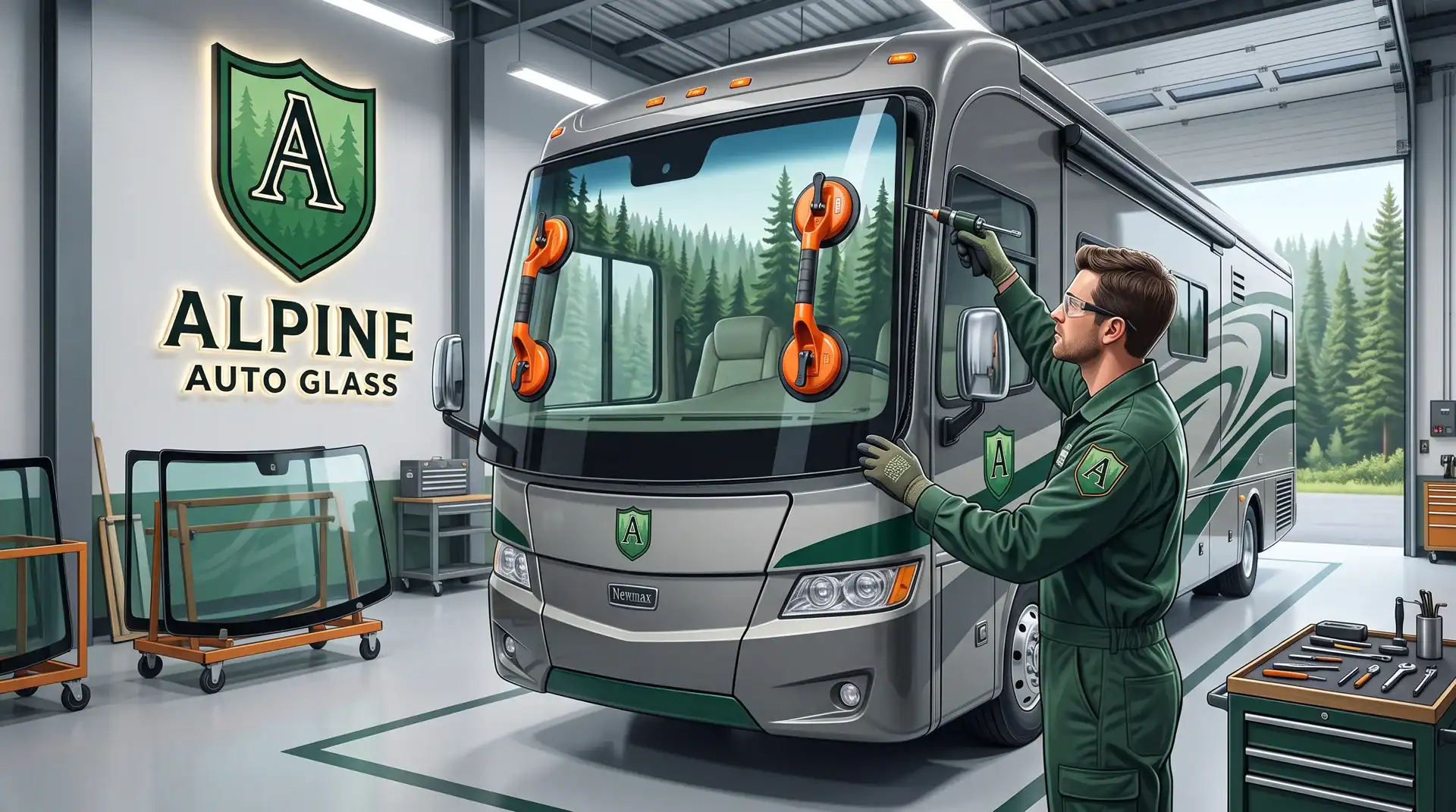
On a Class 8 truck, bonding specs, glass construction, cab movement, and safe drive-away timing may change enough that even a skilled passenger-car installer can get the job wrong.
If you’ve already paid once for leaks, stress cracks, wind noise, or a truck put back in service too early, this is the difference that mattered.
Bigger Glass Is Not the Real Difference
Size gets attention because it’s visible. The difference is actually load, flex, and liability.
Passenger vehicles have one set of crash assumptions, body rigidity, and adhesive needs; commercial cabs do not. Many shops miss this because the glass still fits, which feels fine until the bond line fails.
Federal Glazing Standards Aren’t Optional
Commercial auto glass isn’t just about fit and seal. It has to meet Federal Motor Vehicle Safety Standard (FMVSS) No. 205, and, under 49 CFR §393.60, that requirement applies in real-world operation, inspection, and liability.
That means the glazing material used in a truck has to:
- Meet the correct safety standard for the vehicle.
- Be properly marked for compliance.
- Maintain visibility and structural integrity in defined driver sight areas.
This isn’t theoretical. Inspectors are looking for:
- Damage in critical viewing zones
- Improper tint or light transmission
- Incorrect or non-compliant glazing materials
A windshield that technically “fits” but doesn’t meet FMVSS 205 or §393.60 requirements can still fail inspection, create liability exposure, or put a truck out of service.
That’s where a passenger-car mindset breaks down. The job isn’t just installing glass that seals. It’s installing a component that meets federal safety standards, maintains driver visibility, and performs correctly under commercial operating conditions.
If that conversation turns into “we use the same glass on everything,” you’re not getting a compliant install. You’re getting a convenient one.
Air Ride Cabs Change the Urethane Conversation
Urethane gets talked about like it’s glue. On an air-ride cab, that’s not just incomplete; it’s dangerous. The cab is designed to move and isolate vibration, which means the windshield bond is dealing with a different flex pattern than the glass in a passenger SUV.
That changes the spec conversation fast. Modulus (the measure of adhesive stiffness), bead profile (the shape and size of the adhesive applied), primer compatibility, skin time (the time it takes for the adhesive to form a surface film), and full cure behavior all matter because the adhesive is doing retention work while the cab twists, settles, and rebounds.
If you use passenger-vehicle urethane because it’s what the shop keeps on the shelf, you can end up with a bond that looks fine in the bay but starts to lose the fight once the truck is loaded, running rough roads, or spending long hours in temperature swings.
A windshield can sit flush, not leak, and still be wrong for the vehicle.
The failure mode isn’t always dramatic on day one; sometimes it shows up as edge stress, urethane separation, repeat wind noise, or the second install that should never have been needed in the first place.
Environmental conditions matter more than shops like to admit.
Cure time (the time required for the adhesive to fully harden) varies with temperature, humidity, bead size, and whether the pinchweld (the frame area where the glass is set and bonded) was properly prepped.
A cold install in a shop that is opening doors all day is not the same job as a warm, controlled install on a sedan, even if the invoice makes them look interchangeable.
We don’t recommend approving a Class 8 install unless the shop can name the exact urethane line and primer system, and explain why that combination fits the cab design.
If the answer is “we use the same stuff on everything”. Same product, same prep, same timing, same speech.
That’s how you end up paying for commercial downtime for a passenger-car process.
Thickness, Flex, and Bond Lines Decide Whether It Lasts
Glass thickness changes the job before cutting the old bead. Commercial windshields can be heavier, stiffer, and less forgiving about bead lay, glass set, and installer stand-off.
Even a small thickness mismatch can alter how the part seats and how pressure distributes along the edge. If the replacement is off spec or bead height is inconsistent, the cab will reveal issues later through stress, movement, or cracks after the route starts—not during install.
The pinchweld matters just as much. Rust, poor old-urethane removal, reused setting blocks, or contamination at the bonding surface can ruin a good glass part with a bad foundation. Passenger auto glass work sometimes hides these shortcuts because the vehicle doesn’t flex the same way. On a commercial cab, the mistakes keep working after the truck leaves.
Safe Drive-Away Time Is Where Shops Get Casual
Safe drive-away time is where the most casual auto glass shops expose themselves.
They usually quote one number like it’s universal, then push the truck back into service because the adhesive has skinned over, and the schedule is ugly. Generic two-hour promises get handed out for jobs that have no business being let go that soon.
That’s not how commercial auto glass should be handled.
Intervals are supposed to depend on the exact urethane, temperature, humidity, bead size, and commercial vehicle application.
On some Class 8 jobs, the difference between installed and ready for service is between a bond that has started to set and one that can actually withstand road vibration, cab movement, and emergency loads.
If a shop can’t give you a job-specific safe drive-away time instead of a canned number, they’re guessing with your truck and your liability.
The Questions Worth Asking Before You Approve the Work
You don’t need to be a glazing engineer to screen a new shop.
You only need four questions to help you look like a pro:
Ask the shop you’re considering if they can:
- Provide the exact glass specification and compliance rating you are installing on my truck.
- Specify the urethane and primer system, and explain why this combination matches the cab design.
- State the safe drive-away interval adjusted for today’s temperature and humidity, rather than a standard number.
- Indicate what post-installation checks are necessary if the truck is equipped with cameras, sensors, or lane-assist hardware.
If your auto glass provider can’t answer those cleanly, they are not ready for commercial work. The windshield may be the part you can see, but the process is the part that keeps costing money.
If you want an honest quote from an honest commercial auto glass shop, contact Alpine Auto Glass today.