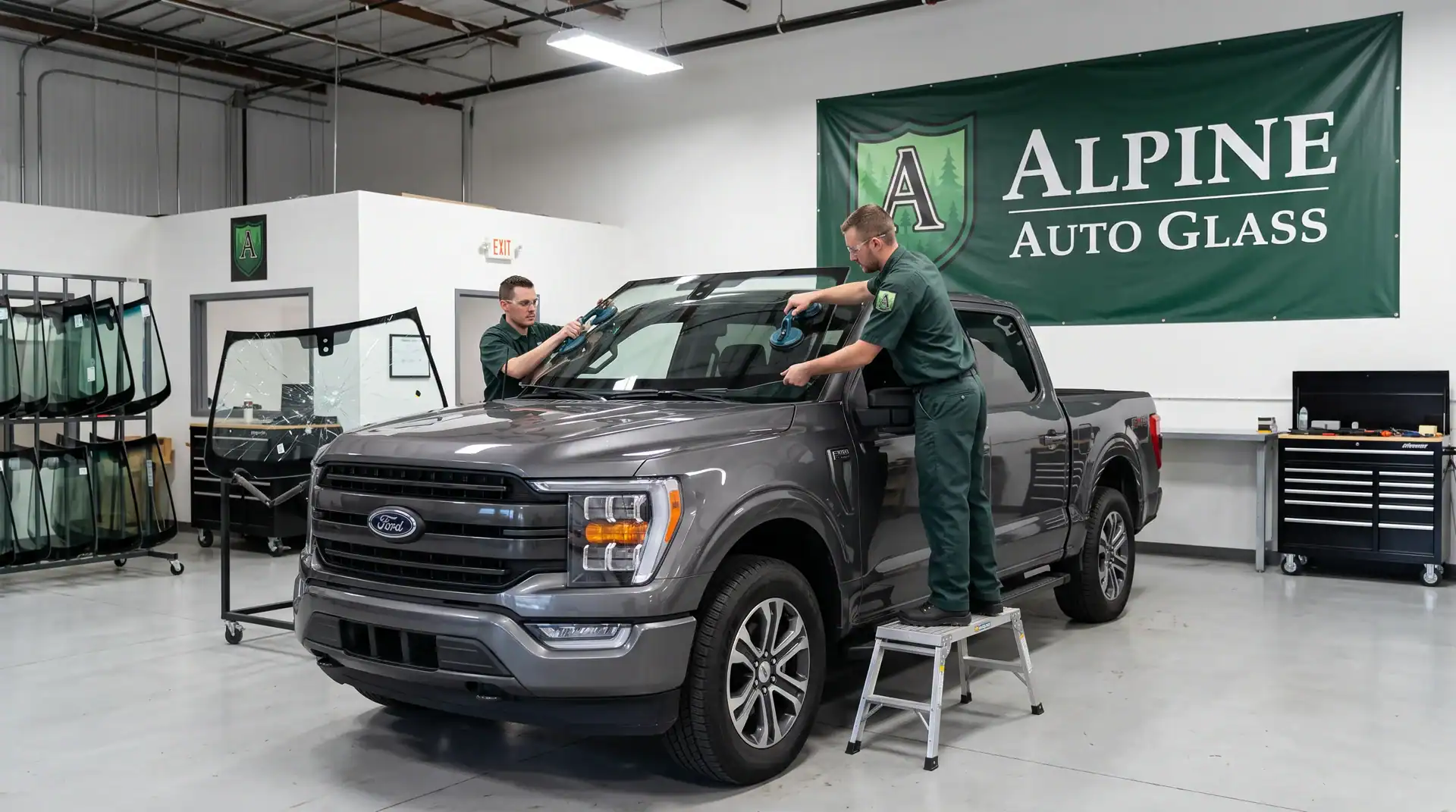
The new windshield on your vehicle is attached with urethane adhesive, laid down as a bead around the edge, and when you sign off on the job, that adhesive hasn’t finished curing.
Even though the glass looks perfect when the technician leaves, how strong the bond ends up being depends largely on how the vehicle is treated over the following 48 hours. Things that can undermine it include taking it through a car wash, slamming a door while all the windows are shut, and pulling the tape off too soon because it looks untidy.
This guide is written for two kinds of readers. One is the driver who wants to know if it’s safe to wash the car today, and the other is the fleet manager trying to decide whether a van is ready to go back on its route.
Your Windshield Is Held in by Something Still Curing
Modern windshields don’t sit in a rubber gasket. On nearly every current car and truck, the glass is bonded to the body’s pinch weld with a bead of urethane adhesive, and that bond does structural work.
During a crash, that bond is what holds the glass in its opening, and keeping it there is the subject of the federal windshield-mounting standard, FMVSS 212. The glass also helps the cab hold its shape, so related standards deal with how the roof behaves when it’s crushed. That makes auto glass a safety component regulated at the federal level, and the view through it is really the only cosmetic part of it.
Urethane firms up in stages. First it’s tacky, then strong enough to drive on, then fully cured. How fast it moves through those stages depends on the adhesive, the temperature, the humidity, and the vehicle. A January install in Spokane Valley and a July install won’t cure on the same clock.
That’s why safe drive-away time isn’t one universal number. Sika, one of the major adhesive makers, rates its Sikaflex SOLO product at a 3-hour minimum drive-away time. Other urethanes carry other ratings. Your installer should give you the window for the adhesive actually in your vehicle, and you should stick to it.
Keep in mind that a windshield strong enough to drive on usually hasn’t fully cured yet. During that stretch, the bead can still be soft enough to shift when pressure is put on it, or to let water through at a weak spot. The advice in the rest of this article really amounts to avoiding any load on the bond until it’s ready to take it.
Skip the Car Wash Until the Bead Has Set
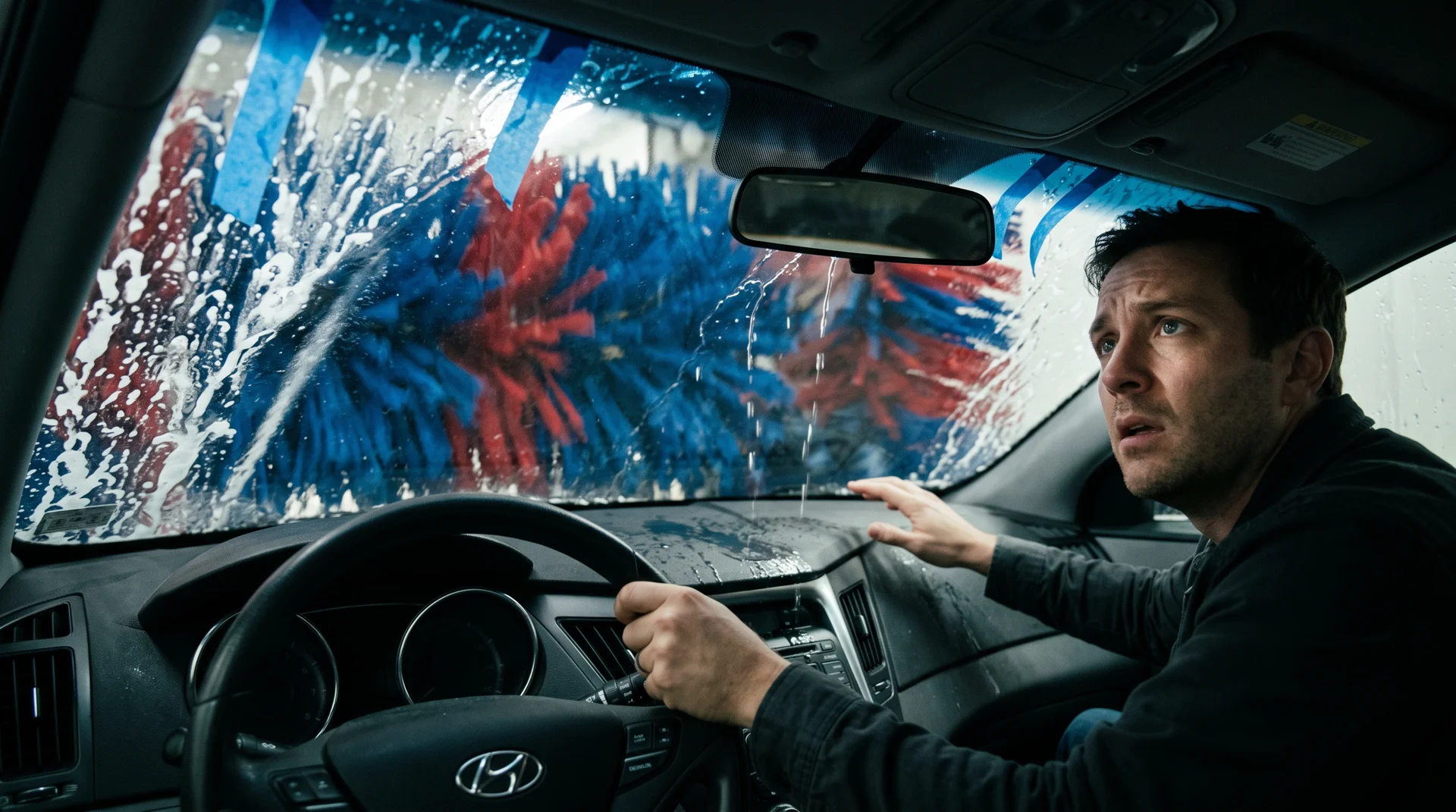
Driving in the rain is usually fine. The trouble usually comes from car washes, both touchless bays and brush tunnels.
In a touchless wash, the high-pressure jets are designed to force water into seams, and the edge of a new windshield is a seam where the urethane hasn’t hardened yet. Spraying it from close range can drive water into the bead before it has skinned over, and it can also lift the molding edge. A brush tunnel causes trouble in another way, since the spinning brushes drag hard across the glass and trim and pull sideways on a windshield that hasn’t locked into its opening.
Either way, you won’t see the damage on day one. It shows up weeks later as a slow leak or a whistle at highway speed.
So wait. Ask your installer how long to hold off on washing, and treat that as the minimum. If the glass gets dirty enough to hurt visibility, wipe it gently with a soft cloth and plain water and keep away from the edges. Fleet yards with their own wash bay should tag the unit so nobody runs it through out of habit.
Why a Slammed Door Pushes on the Glass
A hard door slam can actually push on the windshield from the inside. With all the windows rolled up, very little air can escape the cabin, so slamming a door compresses the air for a moment. That brief pressure rise acts on the whole interior, and the glass is part of it.
A cured install handles it fine. On a fresh one, the urethane is still pliable, and a hard hit of cabin pressure can nudge the glass or open a small channel in the bead. One slam probably won’t ruin anything. A delivery van with a driver slamming the sliding door all shift long is a different story.
Most of the risk goes away if you get into two simple habits. The first is to keep one window open a crack until your installer tells you the bond has set, which gives the pressure somewhere to go. The second is to close doors gently by pushing them shut rather than swinging them, and that applies to tailgates, hatches, and sliding doors as well, since they push a lot of air when they close.
If you run a fleet, tell your drivers directly. They’re the ones closing those doors, and nobody thinks about it unless someone says so.
Leave the Tape Alone
The tape across the top edge and down the pillars looks like something the tech forgot to take off. It’s there on purpose. Retention tape holds the glass and molding in place while the urethane firms up, so the windshield doesn’t creep down in the opening and the molding stays tight to the body.
If you pull it early, the glass can settle just far enough out of position to cause a leak or a gap in the trim. Leave it on until your installer says it can come off. Then peel it slowly, folding it back over itself, so it doesn’t lift the fresh molding.
The Rest of the List, Plus One Must-Do
A few more habits put strain on a bond that isn’t ready for it:
- Wait out the full drive-away time your installer gives you, even for a quick run to the store.
- Avoid washboard gravel, logging roads, and deep potholes for the first couple of days if you can route around them.
- In cold weather, give the defroster time to melt whatever has frozen near the windshield perimeter rather than scraping it off.
- Keep roof racks empty of anything heavy while the urethane is still setting.
- Confirm that your ADAS camera was recalibrated before the technician leaves.
Unlike the other items, that one isn’t optional. Any vehicle with a forward-facing camera mounted on the windshield needs the camera recalibrated after the glass is replaced, and on many vehicles built after 2018 it’s the same camera that runs lane-keep assist, automatic braking, and adaptive cruise. According to IIHS research, automakers require calibration whenever a sensor has been removed and put back in. If the camera ends up aimed even slightly off, it may misread the lane lines or brake too late, and in most cases you wouldn’t find out until the moment you needed it to work.
Alpine does recalibration in-house so that you won’t need an extra trip to a dealer. Ask for confirmation that it was completed, and keep the record with your service paperwork.
What Alpine Stands Behind After the Tech Leaves
Good aftercare protects the install. Alpine is responsible for the install and backs it with a lifetime workmanship warranty.
The other half is honest information. Alpine’s installers tell you the actual drive-away time for the urethane used on your vehicle and the aftercare window that goes with it, instead of a generic “you’re good to go.” A mobile install in your driveway or fleet yard takes 60–90 minutes. That speed comes from organized work, and nobody shortens the cure time to get it. (If an installer ever tells you to drive off right away without naming the adhesive’s rating, ask why.)
And if a question comes up on day two, you’re calling a family-owned shop where the techs answer their own phones. Aaron Sterner has run the business since 2004 and still oversees installs. No call center, no ticket queue.
A Leak, a Whistle, or Lifted Trim Means Call Now
Should anything seem wrong during the first week, give us a call. Signs worth calling about include a damp corner of the headliner after it rains, a whistle at highway speed that wasn’t there before, molding that has lifted or sits crooked, and water spots on the dash, since each suggests a problem with the bond or the trim.
They’re much easier to fix early than after water has sat against the pinch weld for weeks. Don’t run a bead of hardware-store silicone over it yourself, because that makes the proper repair harder. Describe what you’re seeing, and let the shop that did the work look at it.
For the first 48 hours, the main thing is to treat the vehicle with a little care, which means no car wash, closing the doors gently, and leaving the tape where it is. Check that the camera recalibration was done before the technician goes, and please call us if anything seems off during the first week. Once the 48 hours have passed, the bond is in a position to do the job it was designed for.
Alpine replaces windshields throughout Spokane and Spokane Valley and comes to you, with no mileage fees inside the service area. ADAS camera recalibration is done in-house, and you’ll be told the actual drive-away and aftercare timing for your specific vehicle. In Washington, call 509-892-6699; in Idaho, call 208-640-0549. If you have an emergency and call before 2 PM, you’ll get same-day service.