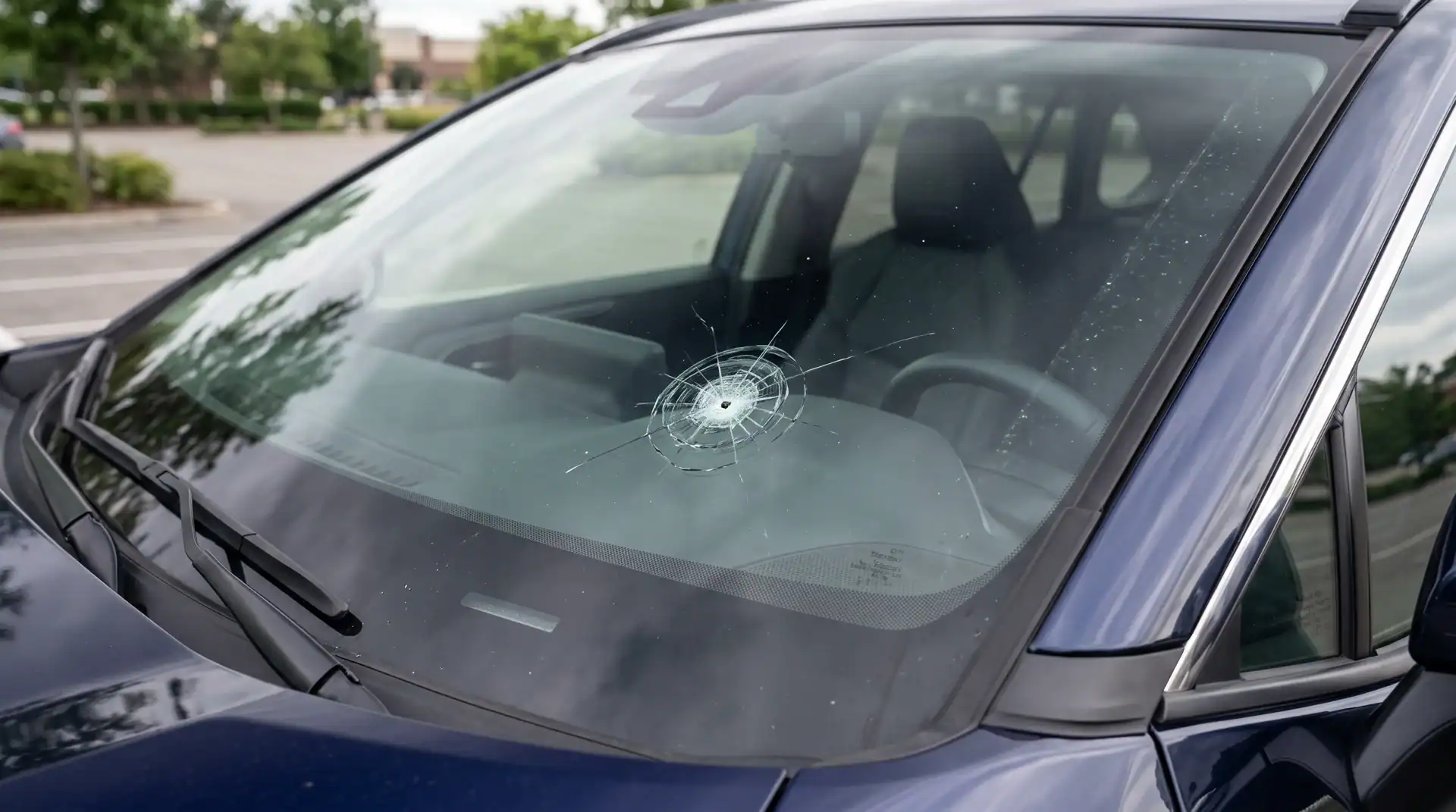
A $500 glass deductible on your policy doesn’t mean every rock thrown off a gravel truck on I-90 will cost you $500. That figure is what you pay before comprehensive coverage takes over the rest of the bill, and when the damage is to glass, it tends to come into play less often than people expect. You could owe the full $500, or nothing. That depends on how your policy handles glass, whether the damage can be repaired, and whether the shop bills your insurer correctly. If you’re looking at a cracked windshield right now, you can find out your real number before anyone starts working on the car.
What the $500 on Your Declarations Page Actually Means
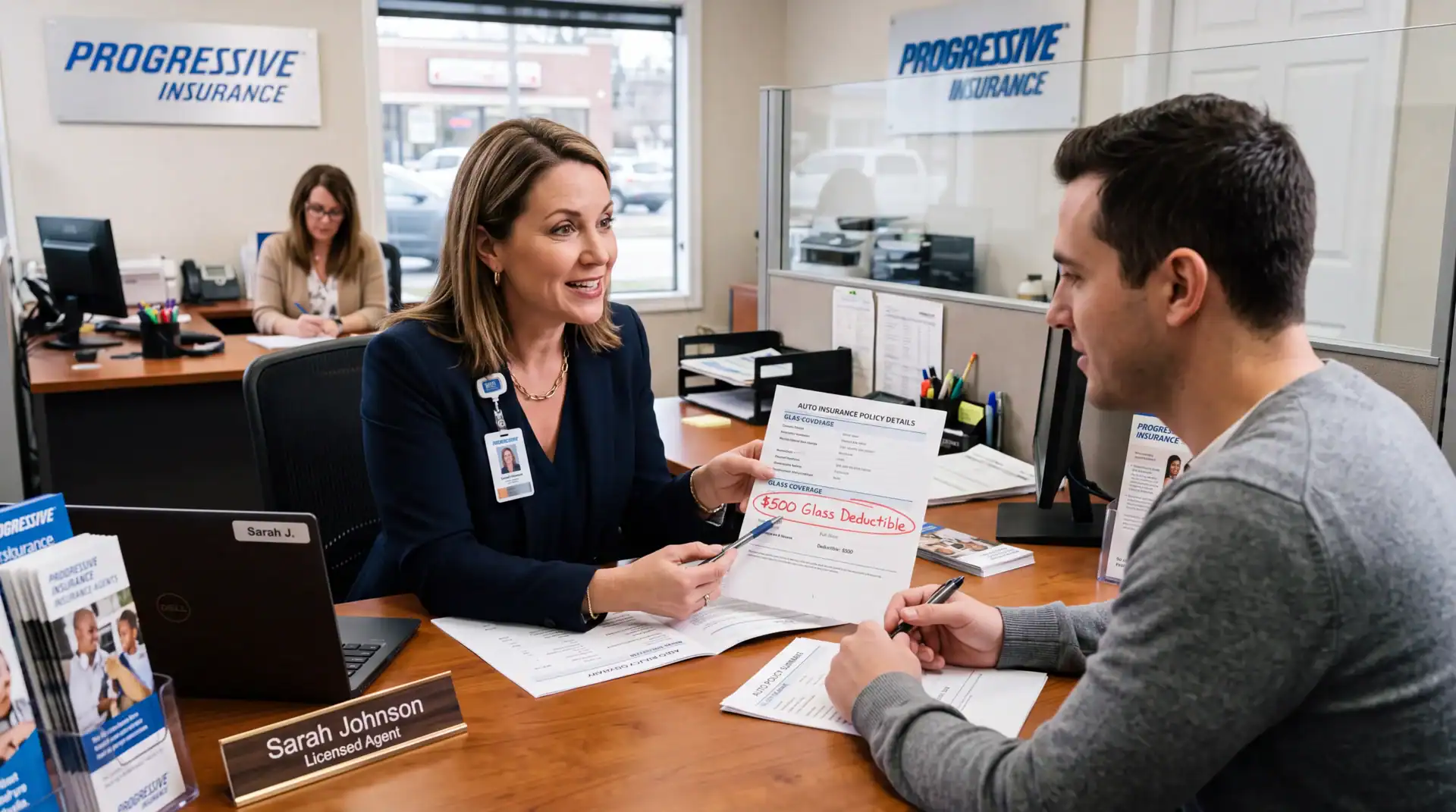
In most cases, a glass claim falls under comprehensive, the same section of the policy that covers theft, hail, and hitting a deer. You pay the deductible first as your portion of the bill, and your insurer then pays the remaining approved amount under your policy terms.
That’s the default. Plenty of policies don’t follow it for glass.
Some carry a separate glass deductible that’s lower (or higher) than the comprehensive number. Others include a full-glass endorsement, which typically removes the deductible on glass claims. A $500 deductible with full glass coverage is a very different policy than a $500 deductible without it, even though both show the same number on the declarations page.
Two people insured by the same company can have very different policies, so a shop can’t tell which kind you have just from the vehicle you drive or the carrier you use. Check the declarations page or your carrier’s app for terms like “full glass,” “glass coverage,” or a line showing a separate glass deductible. Don’t worry if a couple of minutes of searching turns up nothing, since we check that first when you call.
Chip Repair Is Where the Deductible Often Disappears
For chip repair, many insurers waive the glass deductible entirely, largely because it saves them money. Injecting resin into a chip costs the insurer much less than paying for a new windshield three weeks later, once a cold Spokane morning has turned a star the size of a quarter into a crack running across the driver’s line of sight.
That’s why Alpine offers free chip repair for many insurance customers. Whether you qualify depends on your carrier and your specific policy, and we confirm that before any work starts.
Timing matters more than people treat it. Dirt and moisture work into an open chip, and a defroster blasting on a 15-degree morning is often what finishes it off. A chip you call about today is usually a repair. The same chip in February might be a replacement.
Once a Crack Passes Six Inches, Run the Numbers
On a policy without a full-glass endorsement, a new windshield goes to your insurer as an ordinary comprehensive claim, so you’d pay the $500 deductible before your coverage covers anything. A crack that has grown past about 6 inches generally can’t be repaired, which means a crack that long is usually when you end up paying that deductible.
So make one quick comparison. If the cash quote for your replacement comes in under $500, a claim gets you nothing from the insurer, and paying the shop directly is the cleaner move.
The Line Items That Show Up on a Replacement
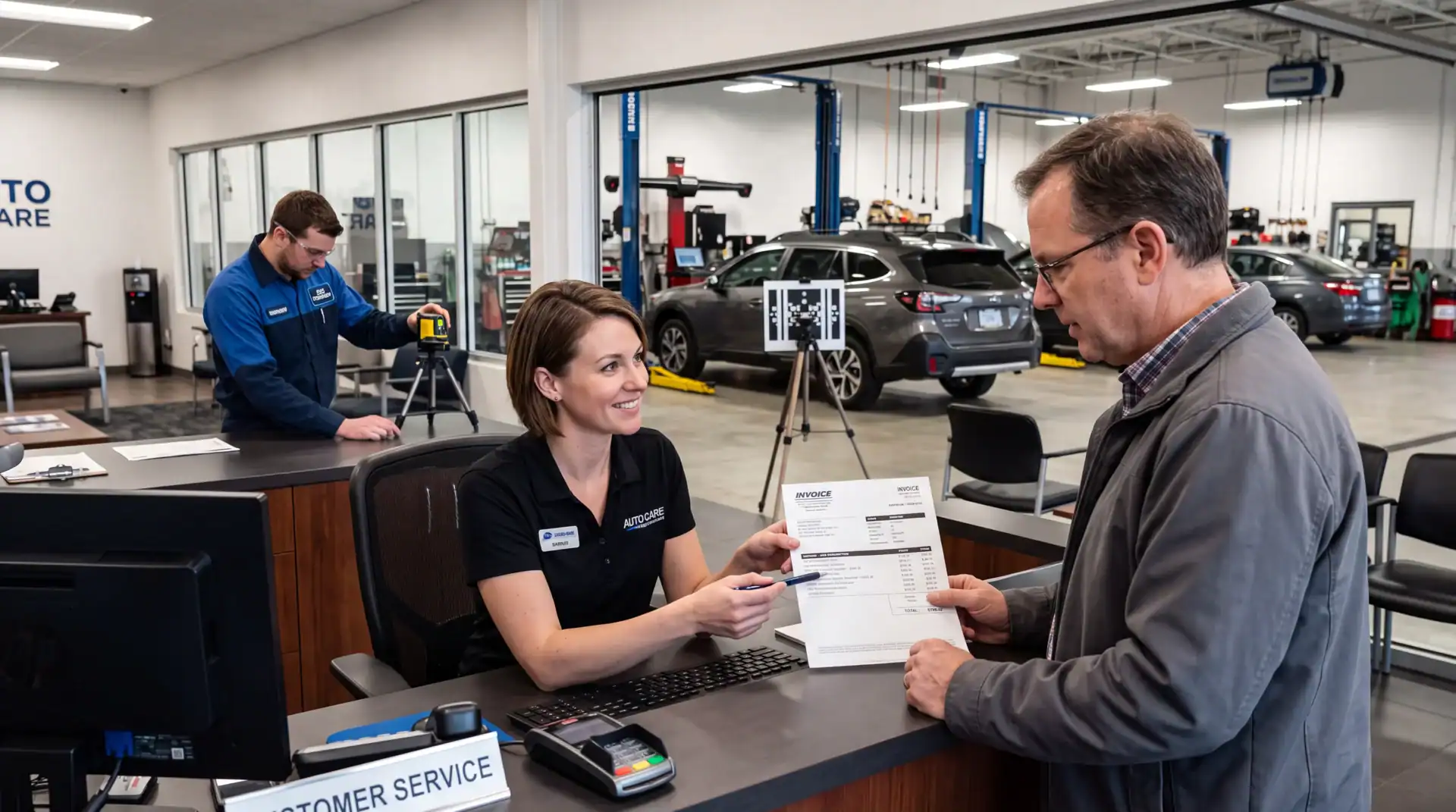
A windshield replacement isn’t billed as a single charge. If you ask Alpine for a cash quote, you’ll see the glass, the labor, and the urethane and molding kit on separate lines, along with calibration when the vehicle needs it. Those same charges are still on the bill when the job runs through a claim; the difference is that your carrier pays them rather than you.
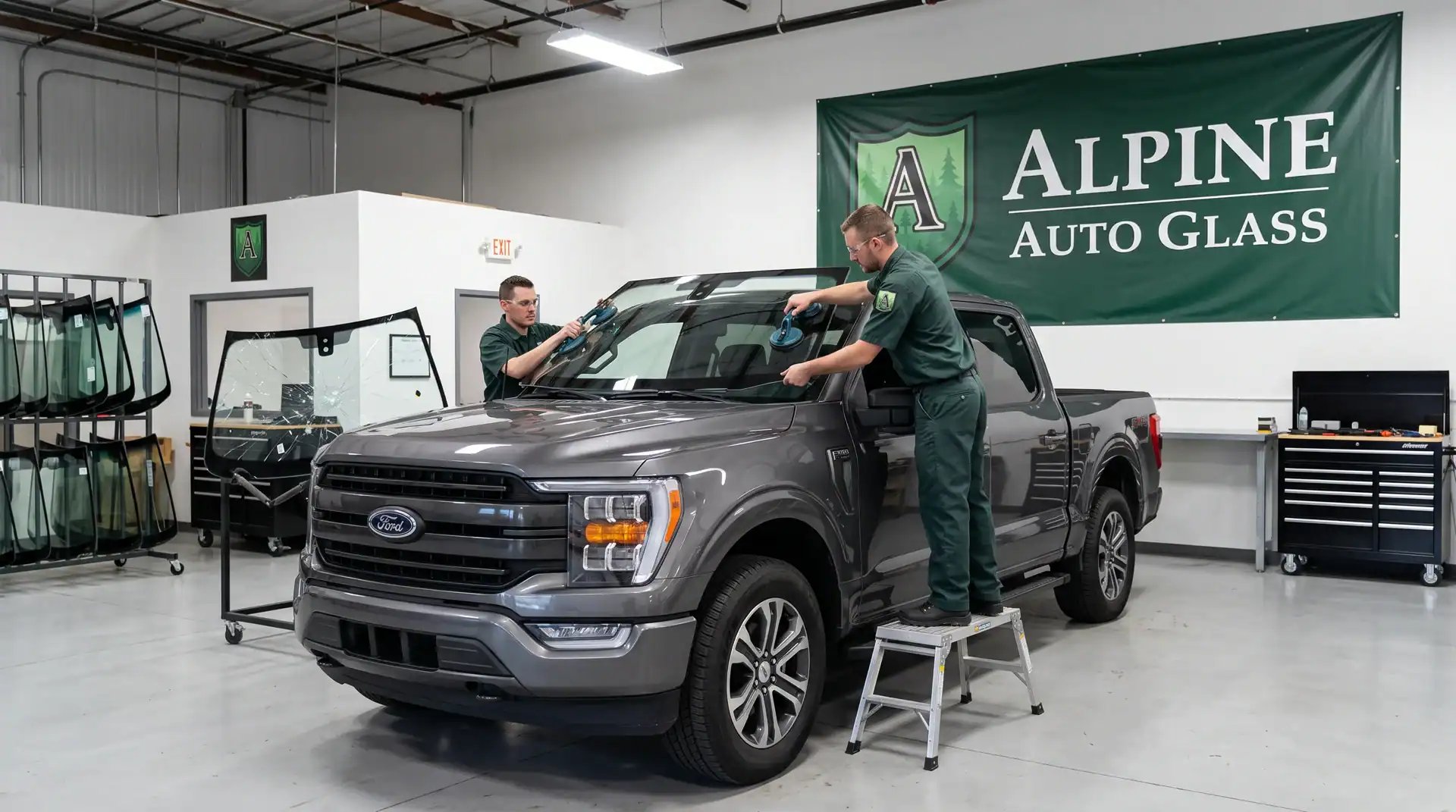
It’s easy to think of the urethane and molding as small parts of the job. The urethane, though, is the adhesive that keeps the windshield in its frame, and in many newer vehicles the windshield also helps hold up the roof and serves as the surface the passenger airbag deploys against. When a replacement fails without anyone noticing, a hurried urethane job is usually the cause. For that reason, the installer matters more than the glass itself (which is OE-equivalent and meets the same federal safety standards).
Calibration is the line item that catches people off guard.
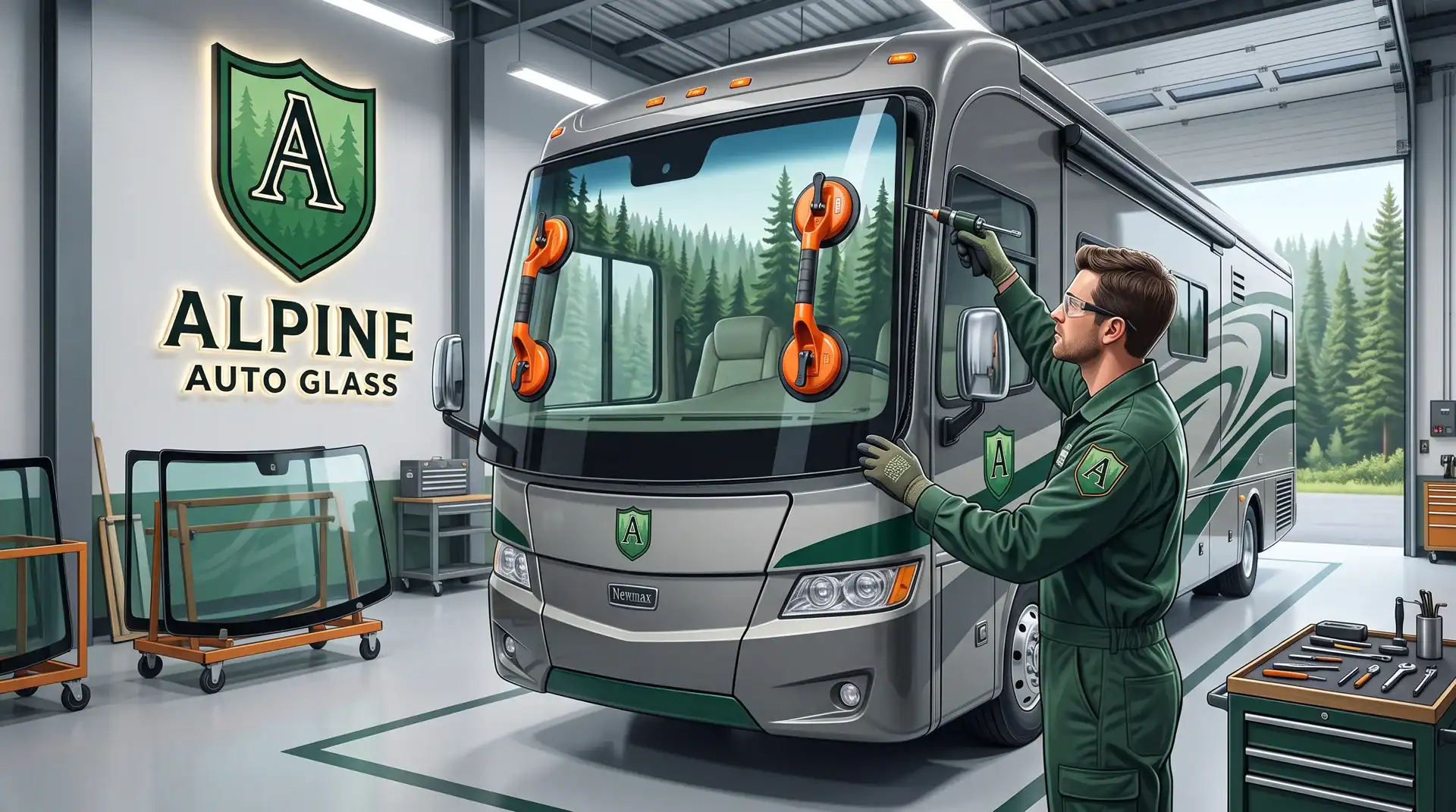
Any vehicle with a forward-facing camera needs ADAS recalibration after the windshield comes out, including many vehicles built after 2018 with lane-keep assist, adaptive cruise, collision warning, or automatic braking. The camera is mounted to the glass. Shift the glass a fraction of a degree, and the camera reads the road from a slightly different angle, which at highway speed on US-195 can mean the system tracks the wrong lane or brakes for nothing.
It’s worth checking rather than assuming that the claim covers calibration. Ask your insurer whether it’s included in the glass claim, and ask the shop whether they calibrate on site or send you to a dealer once the glass is in. Alpine calibrates in-house, so there’s no multi-day handoff to a dealer or third-party calibration shop, which many independent glass shops still depend on. If you manage a fleet and have three trucks out of service, that handoff is the difference between getting them back on their routes the same day and leaving them at a dealer lot until the following week.
How Alpine Gets You the Number Before Work Starts
When a bill comes in higher than expected, it’s usually because work began before anyone checked what the policy would cover.
We do it the other way around at Alpine. Your coverage gets verified in under 5 minutes once you call, and most of the time you’re still on the line when we finish. We’ll tell you whether you have full glass, whether this particular job triggers the deductible, and whether the claim includes calibration. After that, we file the claim electronically, handle the paperwork, and send the bill straight to your carrier. We work with all major carriers.
Mobile service doesn’t move the number either. There’s zero markup on mobile work, with no mileage fees or convenience charges within our service area, so the price in your driveway in Spokane Valley matches the price at the shop.
Your Insurer Can Recommend a Shop, but You Choose It
When you call a claims line, you may be steered toward one of the insurer’s preferred shops, and the way the rep puts it can make it seem like you have no choice. You do, though: in Washington and Idaho, drivers decide for themselves where their glass is repaired.
A referral network is a business arrangement between the insurer and a shop. It doesn’t change what your policy covers or your deductible. If you want a shop where the techs answer their own phones and calibration happens under the same roof, tell the claims rep which shop you’re using. That’s the whole process.
We often see drivers accept a 2–4 day wait, simply because nobody mentioned they could say no.
Five Questions to Ask Before You Book Anyone
Two phone calls, one to your insurer and one to the shop, settle nearly everything. Ask these:
- Is my glass coverage full, or does my policy carry its own separate glass deductible?
- If it’s only a chip, will the deductible be waived for the repair?
- Will ADAS recalibration be covered under this claim?
- Will the shop send the bill straight to my carrier, or do I have to pay up front and then get reimbursed later?
- Is the glass OE-equivalent, and can I get the workmanship warranty in writing?
If a shop can’t answer the calibration and billing questions on the first call, you’ll probably find out on the invoice.
The $500 on your policy is where the conversation starts, and often not the number you end up paying. Your real out-of-pocket cost depends on your policy’s glass terms, whether the damage can be repaired, and whether calibration is part of the claim. We can confirm all of that in a few minutes, before anything gets scheduled.
To get started, call Alpine at 509-892-6699 if you’re in Washington or 208-640-0549 if you’re in Idaho. In under 5 minutes, we’ll verify your coverage, tell you what you’ll pay out of pocket, and then take care of the claim for you. If it’s an emergency and you call before 2 PM, we’ll get to you the same day, and every installation comes with our lifetime workmanship warranty.