“It cracked, and nothing hit it.” If we had a nickel for every time we heard that phrase…
Maybe it came from a cold Spokane Valley morning, and when you get out to the truck, a line is climbing up from the bottom corner of the windshield that wasn’t there the night before.
You don’t remember hearing a ping on I-90 or following a gravel truck. Regardless, something caused that crack, and in most cases the shape it leaves gives you a clue about what caused it.
A glass tech will read the break before quoting anything, since a rock hit, heat stress, and a failing install each point toward a different outcome: a repair, a replacement, or some hard questions for whoever installed the glass last. If you can read it yourself, the conversation at the counter (or on the phone) tends to go a lot faster.
The Crack Is Evidence, and the Cause Picks the Fix
Every crack begins where the glass was given more force or stress than it could take, so in most cases you can follow its path back to whatever caused it.
Because of that, the cause decides the fix. Resin can often fill a fresh rock chip, but a crack that runs in from the edge without any chip behind it usually can’t be stopped that way. A crack that begins along the bond line a few weeks after a replacement is different again, since it may be a workmanship problem, and that means talking about the warranty before anybody buys new glass.
Before you actually talk price, check where your crack starts, whether there’s an impact point, and when the windshield was replaced. Those answers will cover most of the diagnosis.
Track Down the Impact Point, and You’ll Find the Rock
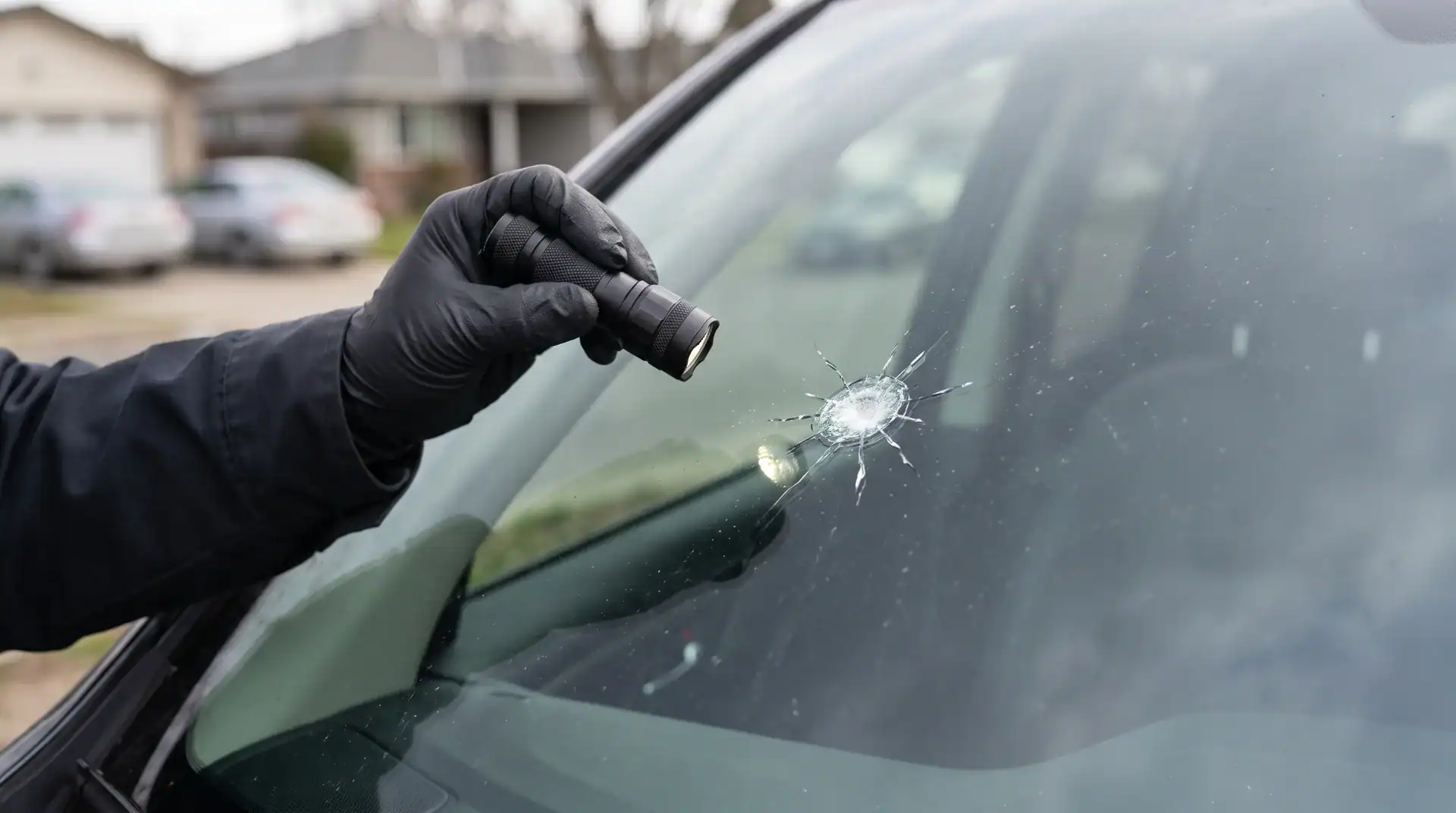
Trace the crack back to where it starts. If it ends at a small pit where glass is missing from the outer layer, something hit you, and every leg of the damage runs out from that point.
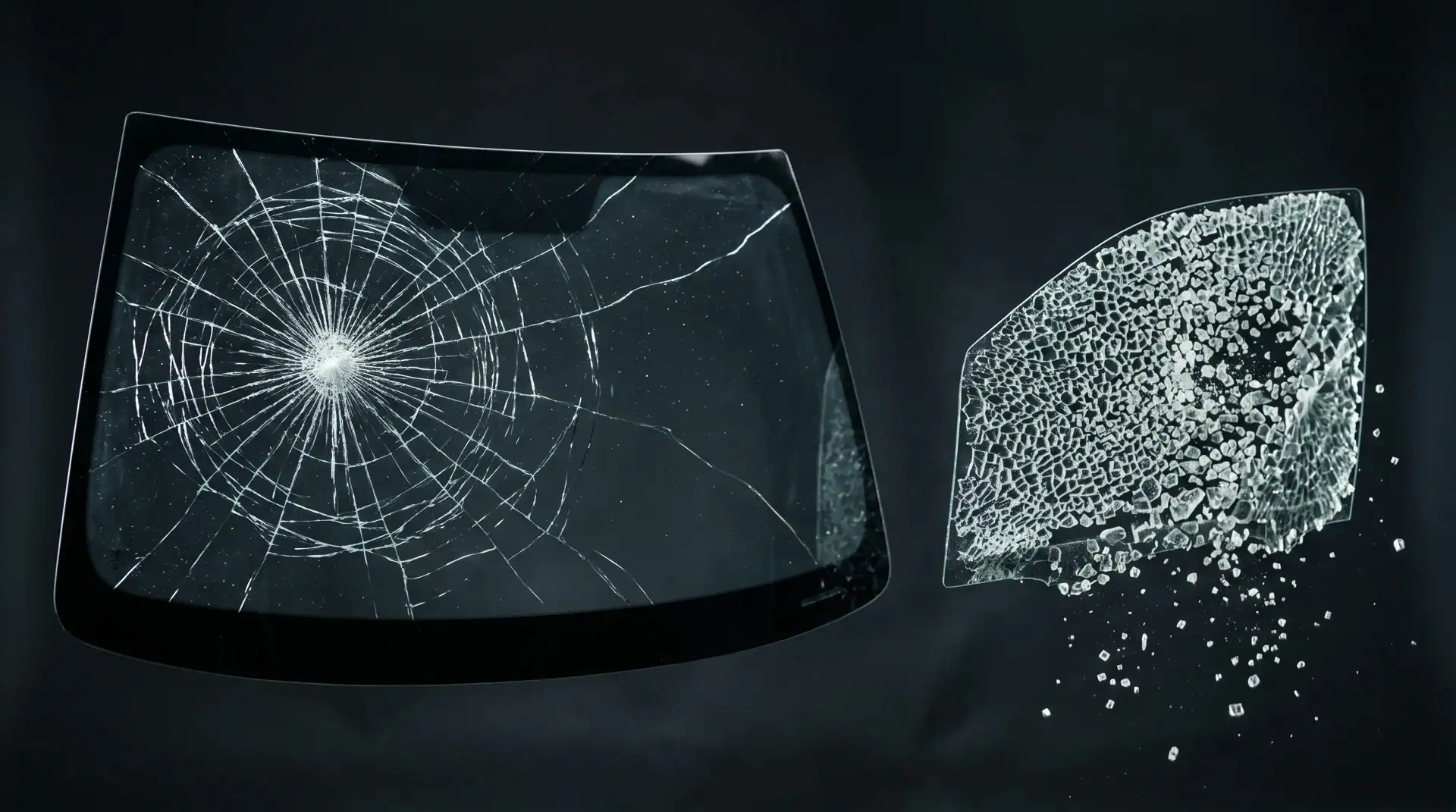
The trade sorts impact damage by shape. A bullseye is a round, dark ring around the pit. A star has short legs running out from the center. A combination break is both at once, a bullseye with legs. A half moon looks like a bullseye that only made it partway around.
Resin repair was built for these breaks. Under the ROLAGS repair standard from the National Windshield Repair Association, stone-breaks up to two inches in diameter and single-line cracks up to 14 inches are repairable. Treat that as the upper limit. In real shops, the call usually comes in shorter, for reasons covered below.
No Impact Point Means the Edge Is Talking
No pit anywhere? Follow the crack the other way. If it starts at the edge of the glass and runs inward with no impact point, you’re looking at a stress crack. ROLAGS’s industry definitions describe it as “Any crack that extends from an edge and lacks an impact point.”
Most of the time, the culprit is a temperature change. As glass warms, it expands, so if the center of the windshield heats up faster than the edges do, strain collects at the edge, which is already the weakest part of the glass. During an Inland Northwest winter, the typical example is running the defroster on high against a frozen windshield, or pouring a kettle of hot water over the ice to save a few minutes. Summer reverses it, with the AC blasting into a cab that’s been sitting in the sun.
Deciding what to do about a stress crack isn’t the same as deciding about a chip, and here a shop’s judgment matters more than any chart does.
Hail Leaves More Than One Mark
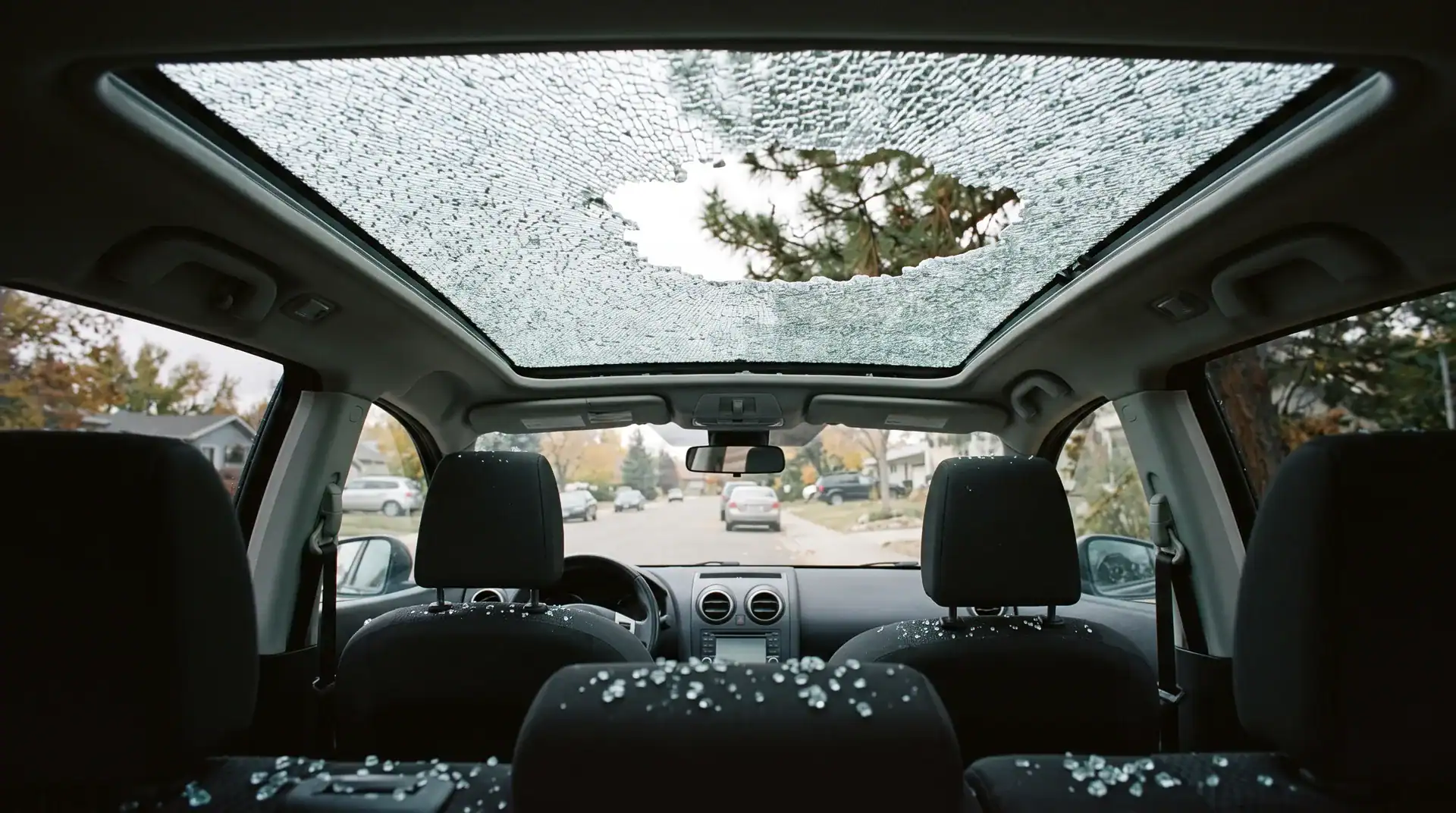
It’s unusual for hail to hit only once. After a storm, you’ll typically find several impact points spread across the glass, often about the same size, and matching dents in the hood and roof can confirm the cause. A single pit points to a rock, while a dozen that appeared the same afternoon points to the weather.
With hail, a tech counts and measures the breaks, and a windshield with several small ones in the driver’s view may not be repairable even though none of them would rule it out alone. Hail is usually a comprehensive claim with most carriers, so it makes sense to mention the dents on the body in the same call where you report the glass.
A Crack at the Bond Line Is a Question About the Last Install
A windshield is bonded to the pinch weld, the metal flange around the opening, with a bead of urethane that does structural work for the cab. When that bond is done wrong, the glass usually shows it at the edge.
If the glass was replaced in the last few weeks or months and the crack starts right at the line where it meets the body, the install is more likely the culprit than the weather. Other clues are water getting into the cab after a car wash, a whistle once you’re up to highway speed, and molding that rides higher on one side.
Any one of those by itself may turn out to be nothing. When an edge crack shows up alongside a leak on recently installed glass, though, the combination is worth taking seriously.
The usual cause is uneven support. If the urethane bead runs thin in one spot, or the glass rests on a high point or touches bare metal, the body flexes over every bump, and that one point takes the load. Rust on the pinch weld that wasn’t treated before the new glass went in can cause the same kind of trouble later.
Cure time is just as important. Urethane doesn’t reach full strength right away, and how soon it’s safe to drive depends on the adhesive and on the conditions (cold, dry air slows the cure). Driving the vehicle before the bond has set can let the glass shift, and the resulting damage sometimes doesn’t appear for weeks.
So if the glass is recent and the crack starts at the edge, call whoever installed it before you pay for another windshield. If that was Alpine, this is the kind of problem the lifetime workmanship warranty is there for.
From the Reading to Repair, Replacement, or Push Back
Resin repair works best on a small, clean impact break that isn’t in the driver’s direct line of sight. In that case, the resin keeps the break from spreading, and the factory seal stays intact.
The odds are lower for a break that’s already spreading, or one that has sat for weeks taking in road grime and washer fluid. There’s less for the resin to work with, and the repair may not save the glass.
Length is where the standard and real-world practice split. The ROLAGS limit for a single crack is 14 inches, but past 6 inches, a crack usually means replacement. A long crack is more likely to keep moving after repair and more likely to reach into the driver’s view.
Stress cracks and install cracks usually end in replacement, though with an install crack you’ll want to settle the warranty question before anything else happens.
If the vehicle has a forward-facing camera, any replacement needs ADAS recalibration afterward. That camera looks through the windshield for lane-keep assist, adaptive cruise, collision detection, and automatic braking, and a new piece of glass changes what it sees. Because Alpine handles recalibration in-house, it gets done as part of the same job rather than becoming a handoff to a dealer that takes several days.
Photograph It Today, Before It Grows
From here, a crack will only get bigger. Cold nights put load on it, and so do the potholes on Sprague and trips through the car wash; over a few weeks, that adds up to the point where a chip you could have repaired this week may need a full replacement by next month.
Before you call, take some photos. With a good set, a tech can read the break without having to see the vehicle in person:
- A close-up of the damage, with a coin beside it for scale.
- A wide shot taken from the driver’s seat, so it’s clear where the damage sits in your view.
- A shot of the edge of the glass, if the crack reaches it.
- A note with the date of your last windshield replacement, if there was one.
On insurance, comprehensive coverage typically handles glass, and many carriers cover chip repair with no deductible. Your policy sets the details. Choosing who does the work is up to you: in Washington and Idaho, you pick the shop, whatever your insurer’s phone script suggests.
By this point, the crack is already there, and what it ends up costing you depends on whether it gets read correctly. It might be a rock chip caught early enough to repair, or a stress crack that calls for new glass, or a bond-line failure, in which case you should go back to the last installer before spending anything.
Send Alpine your photos or call 509-892-6699 in Washington or 208-640-0549 in Idaho. The techs answer their own phones, and emergency calls placed before 2 PM get same-day service. Mobile service costs the same as bringing the vehicle in. Alpine verifies your coverage and bills your carrier directly, and a replacement on a camera-equipped vehicle includes ADAS recalibration.